





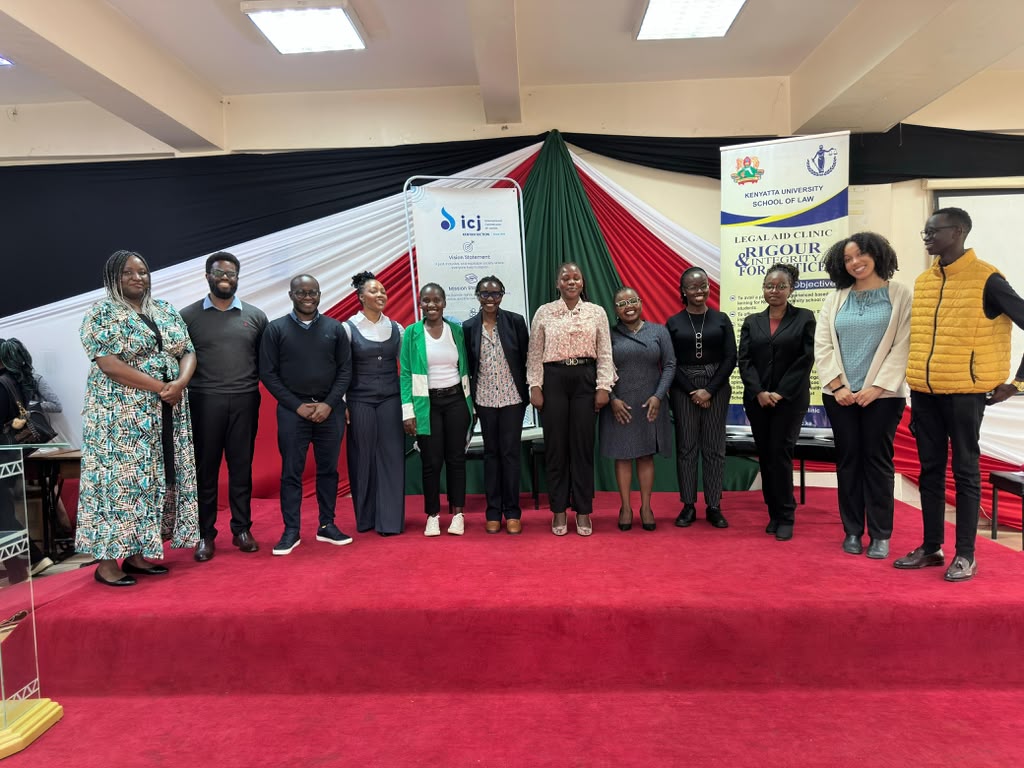
On 1 July 2026, the International Commission of Jurists – Kenyan Section (ICJ Kenya), in partnership with the Raoul Wallenberg Institute of Human Rights and Humanitarian Law (RWI) and NOREC, convened a public forum at the Kenyatta University School of Law titled “Who Pays for the Cloud? A Public Forum on Data Centres, Water Scarcity, and Human Rights.”
The forum brought together students, academics, legal practitioners, and environmental experts to explore the relationship between digital infrastructure, climate change, water governance, and human rights. As investments in data centres continue to grow across Africa, participants examined the opportunities presented by digital transformation alongside the environmental and governance challenges associated with increased energy and water consumption.
The programme opened with welcome remarks from representatives of Kenyatta University School of Law, ICJ Kenya, and the Raoul Wallenberg Institute. This was followed by a context-setting presentation that introduced participants to the environmental footprint of data centres and their implications for water security, climate change, and human rights.
An engaging panel discussion explored four key themes: understanding data centres and digital infrastructure; the legal and policy framework governing water rights in the context of climate change; innovation and technology in addressing environmental challenges; and environmental and water governance in an era of rapid digital development. The discussions emphasized the importance of balancing technological innovation with sustainable resource management, transparency, accountability, and the protection of fundamental human rights.
The panel featured a diverse group of experts who brought legal, policy, academic, and governance perspectives to the discussion. Keamogetse Motsage, a Legal Research Fellow at ICJ Kenya under the NOREC Programme, explored the growing role of data centres and their implications for climate justice and governance. Florence Kubaza, Programmes Officer and Fellow at ICJ Kenya, examined the legal and policy framework governing water rights, highlighting the intersection of climate change, environmental governance, and human rights. Dr Ivy Gikonyo, Manager of the Expression, Information and Digital Rights Unit at the Centre for Human Rights, University of Pretoria, shared insights on how emerging technologies and innovation can support sustainable development while safeguarding human rights. Irene Asuwa, a social scientist and researcher specializing in ecological justice, water governance, and community engagement, concluded the discussion by examining environmental governance and the importance of equitable and sustainable management of natural resources in the era of digital development.
The forum concluded with an interactive question-and-answer session, where participants reflected on the need for collaborative, rights-based approaches to digital development and climate governance. The event reaffirmed the importance of creating spaces for informed public dialogue and equipping young people with the knowledge to engage in emerging environmental and technological policy debates.
ICJ Kenya also recognizes the invaluable contributions of Juliet Muita and Steve Kamaara in organizing the forum. Serving as the event’s MC, Juliet guided participants through the programme and helped facilitate engaging discussions throughout the afternoon, while Steve played an integral role in coordinating the event. Their dedication and leadership, alongside the support of Kenyatta University School of Law, contributed significantly to the success of the forum.
ICJ Kenya extends its sincere appreciation to the Raoul Wallenberg Institute, NOREC, Kenyatta University School of Law, the moderator, panelists, and all participants for contributing to the success of this important discussion.